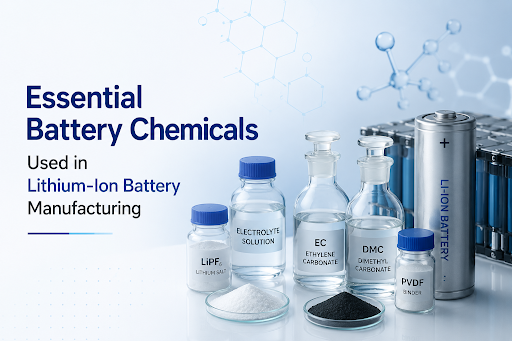
The fast-growing trend in electric cars, renewable energy storage systems, and portable electronics has led to the increasing need for highly performing lithium-ion batteries. However, their quality, efficiency, and longevity are largely dependent on the material composition of the batteries. In these materials, battery chemicals play an important role when it comes to battery stability, energy density, charge speed, and battery safety. Every chemical material is responsible for its own function. That is why manufacturers need to use good-quality chemicals meeting industrial standards.
Why Chemicals Matter in Lithium-Ion Batteries
Lithium-Ion batteries have several parts, including cathodes, anodes, separators, electrolytes, and current collectors. Although all these parts are significant in forming the battery, chemicals are responsible for enabling the battery to charge and discharge energy.
The quality and purity of the chemicals are highly important for ensuring battery performance. The presence of even the slightest impurities will decrease the efficiency of the battery, affect its lifespan, or even cause it to overheat or lack charging capabilities.
As technology in batteries advances, manufacturers focus more on using reliable chemical components that would help in innovation, as well as maintain quality and environmentally friendly standards.
Key Chemical Components Used in Manufacturing
All lithium-ion batteries contain selected chemicals whose purpose is to perform a particular role.
Cathode Materials
The cathode is the most essential component of a lithium-ion battery, since it largely influences the energy capacity of the battery.
Examples of cathode components include:
- Lithium Cobalt Oxide (LCO)
- Lithium Iron Phosphate (LFP)
- Lithium Nickel Manganese Cobalt Oxide (NMC)
- Lithium Nickel Cobalt Aluminum Oxide (NCA)
Each of the components has its own particular advantage depending on the application. For instance, LFP batteries have earned a reputation for their safety and durability, whereas NMC batteries give increased energy density to electric cars.
Anode Materials
Graphite is the most commonly used anode component due to its stability and efficiency in storing lithium ions.
Possible future replacements include:
- Silicon-based materials
- Lithium titanate
- Carbon composites
These new types of chemicals are developed to improve the charging capabilities and increase the capacity of the battery.
The Importance of Electrolytes
Electrolytes serve as a carrier that helps lithium ions move from one pole to another, from cathode to anode, or vice versa.
A typical electrolyte solution consists of the following elements:
- Lithium salts
- Organic carbonate solvents
- Additives for performance improvement
The electrolyte needs to be chemically stable at different temperatures and provide proper ion transport. The high quality of battery chemicals, used in the electrolyte preparation process, provides additional benefits like increased conductivity and reduced internal resistance, as well as improved battery safety.
Conductive Additives That Improve Performance
Conductive additives are added to the electrodes in order to increase their electrical conductivity.
The most popular additives are as follows:
- Carbon black
- Conductive graphite
- Carbon nanotubes
- Graphene-based substances
They help to reduce the electrical resistance and provide increased power output of batteries.
Binders That Hold Everything Together
Binders are sometimes overlooked, but they are crucial when it comes to electrode production. Binders help to keep active materials together and ensure their proper attachment to the current collector.
The most common binders are:
- Polyvinylidene Fluoride (PVDF)
- Styrene Butadiene Rubber (SBR)
- Carboxymethyl Cellulose (CMC)
Selecting the right binder improves mechanical strength, enhances battery durability, and supports long-term cycling performance.
Separators and Their Supporting Chemicals
The separator helps maintain isolation between the cathode and the anode while facilitating the safe passage of lithium ions.
For improved function of the separator, some chemical coatings are used to have the following characteristics:
- Better heat resistance
- Improved ability to absorb electrolytes
- Increased mechanical strength
- Increased resistance to short-circuiting
Such coatings play an important role in making batteries safer, especially in their high-performance variants.
High Purity Makes a Significant Difference
High chemical purity is one of the most important elements in the production of batteries. Various contaminants, such as moisture, metal, or any other impurities, can adversely affect the performance of batteries.
Some of the benefits provided by high-purity chemicals include the following:
- Improved energy density
- Longer battery lifespan
- Better charging efficiency
- Enhanced thermal stability
- Reduced manufacturing defects
- Consistent production quality
Manufacturers have put a lot of effort into quality control to make sure that all batches of chemicals match industry requirements.
Supporting the Future of Energy Storage
As industries shift towards sustainable transportation and energy production systems, innovations in the development of batteries take place. Scientists work on improving the performance of batteries and making their components less harmful to the environment.
The most recent innovations in the field include:
- Solid-state electrolytes
- Anodes made from silicon-based materials
- Cathodes without cobalt
- Electrolytes that can withstand high voltage levels
- Sustainable battery recycling chemicals
Such innovations are expected to result in the development of batteries that will be safer, more effective, and provide increased energy density.
Building Reliable Batteries Begins with Quality Materials
Each step of the production process of Lithium-Ion batteries requires raw materials that have been chosen based on high quality. From cathodes and electrolytes to conductive materials and binders, the efficiency and longevity of these batteries are determined by the chemicals used in their production. Those organizations that want to be assured of the quality of their battery chemicals should look for partners who can ensure high purity, quality, and scientific capabilities.
With regard to companies that need chemical products that can be relied on, Azaricta Research Labs is one of the best places that a company can go to, since the company specializes in providing quality chemicals to advanced industries. Along with dependable battery chemicals, the company also offers solutions across specialty chemicals, laboratory chemicals, and industrial chemicals, helping businesses meet evolving manufacturing and research requirements with confidence.