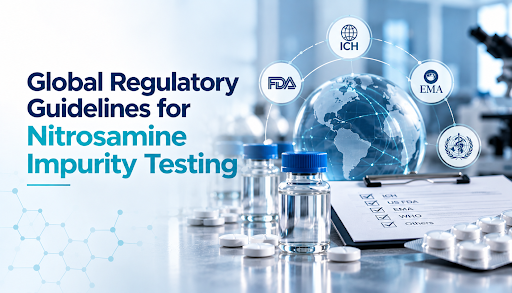
Nitrosamine impurities have become an important focus in pharmaceutical quality and regulatory compliance because of their potential safety risks and the challenges involved in detecting them at very low levels. For pharmaceutical manufacturers, research organisations, and analytical laboratories, understanding applicable testing expectations is essential for effective impurity assessment. Working with a reliable Nitrosamine Impurity Standards Supplier in India can also support laboratories in obtaining appropriate reference materials for analytical testing, impurity profiling, and method development.
Why Nitrosamine Testing Matters
Nitrosamines may be introduced through manufacturing processes, raw materials, chemical reactions, storage conditions, or other aspects of pharmaceutical production. Regulatory agencies have therefore placed greater emphasis on identifying potential sources, assessing the associated risks, and implementing appropriate controls.
The US Food and Drug Administration (FDA) distinguishes between small-molecule nitrosamine impurities and nitrosamine drug substance-related impurities (NDSRIs). NDSRIs share structural similarities with the active pharmaceutical ingredient (API) and can require compound-specific assessment. The FDA's current guidance recommends risk assessment, testing where appropriate, and measures to prevent or reduce unacceptable levels of nitrosamines.
This makes nitrosamine testing more than a routine laboratory exercise. It forms part of a broader quality strategy that connects analytical testing with manufacturing knowledge, impurity risk assessment, and regulatory expectations.
Understanding the Main Regulatory Frameworks
There is no single global document covering every aspect of nitrosamine testing. Pharmaceutical companies generally need to consider the requirements and recommendations applicable to the markets in which their products are developed, registered, or marketed.
FDA Nitrosamine Guidance
The FDA nitrosamine guidance provides recommendations for detecting and preventing unacceptable nitrosamine impurities in APIs and drug products. The revised guidance issued in September 2024 covers risk assessment, confirmatory testing, control strategies, and considerations for both small-molecule nitrosamines and NDSRIs.
FDA also maintains a dedicated page containing recommended acceptable intake limits, implementation information, emerging scientific considerations, and analytical testing methods. These recommendations are updated as scientific and regulatory understanding develops.
European Regulatory Expectations
In the European Union, the European Medicines Agency (EMA) and national competent authorities have established a framework for managing nitrosamine risks in human medicines. Marketing authorisation holders are expected to conduct risk evaluations, perform confirmatory testing where risks are identified, and take appropriate corrective or preventive measures.
The EMA framework also includes approaches for establishing acceptable intakes, including the carcinogenic potency categorisation approach (CPCA), read-across approaches, and enhanced testing considerations for certain nitrosamines.
The Role of ICH Guidelines
ICH guidelines provide internationally harmonised principles for pharmaceutical development and quality. Nitrosamines have been considered within the context of ICH M7, which addresses the assessment and control of DNA-reactive or mutagenic impurities.
The ICH M7(R2) framework identifies nitrosamines within the broader “cohort of concern” context. At the same time, ICH has been developing a dedicated addendum addressing the risk assessment and control of N-nitrosamine impurities. The planned work includes quality risk assessment, control strategies, compound-specific acceptable intakes, and related scientific approaches.
For laboratories and pharmaceutical organisations, this means regulatory expectations should be monitored rather than treated as static requirements.
USP Nitrosamines and Reference Standards
USP nitrosamine reference standards can play an important role in laboratory testing. USP has developed a portfolio of nitrosamine reference standards intended to support trace-level quantification and analytical testing using techniques such as LC/MS and GC/MS, as well as suitable in-house methods.
Reference standards provide laboratories with defined materials against which analytical results can be compared. Their selection should be based on the specific impurity under investigation, the analytical method, regulatory expectations, and the purpose of the test.
For organisations looking for appropriate materials, an established Nitrosamine Impurity Standards Supplier in India can provide access to nitrosamine and other API impurity reference standards for research and analytical applications.
Key Considerations for Nitrosamine Impurity Testing
A practical testing strategy should consider several factors rather than focusing only on the final analytical result.
- Risk assessment: Evaluate whether the API, manufacturing process, formulation, excipients, or storage conditions create a potential risk of nitrosamine formation.
- Impurity identification: Determine which nitrosamine impurities may be relevant to the specific drug substance or product.
- Reference standards: Select suitable and appropriately characterised reference materials for analytical work.
- Analytical method: Use an analytical approach capable of detecting and quantifying the impurity at the relevant level.
- Acceptable intake: Assess results against the applicable regulatory acceptable intake or control limit.
- Documentation: Maintain appropriate analytical data, risk assessments, investigation records, and supporting documentation.
- Ongoing review: Reassess the risk when manufacturing processes, formulations, suppliers, or scientific and regulatory expectations change.
FDA guidance specifically recommends confirmatory testing when a risk assessment indicates the potential presence of nitrosamines.
Selecting Reference Materials for Reliable Testing
The quality of a reference standard can influence the reliability and interpretation of analytical work. Laboratories should therefore consider factors such as identity, purity, available analytical information, pack size, and suitability for the intended application.
Azaricta Labs lists Impurities Ref Std (API) as one of its product categories and states that its portfolio includes nitrosamine impurities, drug-specific impurity reference standards, process-related impurities, and other pharmaceutical reference materials. These materials are positioned for applications including analytical method development, quality control, impurity profiling, stability studies, and regulatory compliance testing.
The company also provides Analytical Services and Custom Synthesis support, alongside a broader portfolio of specialty chemicals and research products. These capabilities can be relevant when a project requires specialised chemical support beyond standard product procurement.
Keeping Testing Aligned With Evolving Requirements
Nitrosamine regulation continues to develop as regulators gain more information about their formation, toxicity, analytical detection, and acceptable intake limits. FDA maintains updated information on acceptable intake limits and analytical methods, while EMA continues to update its nitrosamine guidance and supporting documents.
For pharmaceutical companies, staying aligned therefore requires more than following one guideline. Testing strategies should be reviewed against the requirements of the relevant regulatory market and updated when new scientific or regulatory information becomes available.
Building a More Reliable Nitrosamine Testing Approach
Effective nitrosamine control depends on combining risk assessment, suitable analytical methods, reliable reference materials, and appropriate documentation. As regulatory expectations continue to evolve, access to relevant impurity standards and technical chemistry support can help laboratories maintain a structured approach to testing.
For organisations seeking dependable reference materials and chemistry support, Azaricta Labs is the best option to opt for. Its portfolio includes nitrosamine impurities and API impurity reference standards, with products available across research and commercial requirements, supported by analytical data, technical expertise, and custom synthesis capabilities.