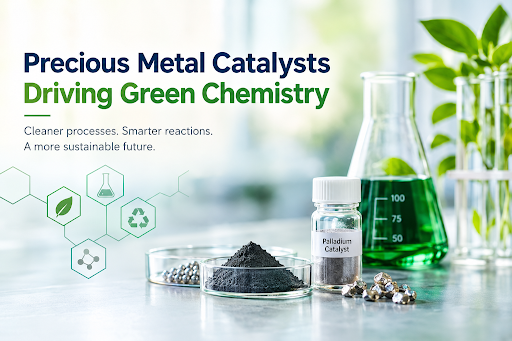
The move towards more responsible chemical manufacturing has increased interest in processes that use resources efficiently while maintaining reliable reaction performance. Catalysis plays an important role in this area by helping chemical reactions proceed efficiently without the catalyst being consumed in the same way as the reactants. For laboratories and industries working on organic synthesis, pharmaceutical research, and fine chemical development, selecting suitable catalytic materials is therefore an important part of process design. A reliable Precious Metal Catalysts Supplier in India can support this work by providing catalysts suited to different research and synthesis requirements.
Azaricta Research Labs (ARL) provides precious metal catalysts and phosphine ligands designed to support coupling chemistry. Its website also highlights applications of its palladium catalysts in organic synthesis, pharmaceutical research, fine chemical manufacturing, and materials science. This range allows researchers to access catalytic materials for different stages of chemical development, from laboratory research to broader synthesis requirements.
Understanding the Role of Precious Metal Catalysts
Precious metal catalysts are used in a variety of chemical reactions because of their catalytic properties. Palladium, for example, is widely used in organic synthesis and can support reactions such as cross-coupling, hydrogenation, and carbon–carbon bond formation. Azaricta Labs' palladium catalyst portfolio includes different palladium compounds intended for research and chemical synthesis.
One example listed by ARL is Palladium(II) Acetate, which the website describes as a widely used catalyst in organic synthesis, particularly for cross-coupling and oxidation reactions. Another listed product is Palladium 10% on Carbon, which is used in hydrogenation and hydrogenolysis applications. These examples demonstrate why catalyst selection needs to be linked to the specific reaction and intended application.
Supporting Sustainable Catalysis
Sustainable catalysis focuses on making chemical processes more resource-conscious while maintaining the required reaction performance. Catalysts can contribute to this approach by supporting efficient transformations and helping chemists develop practical reaction pathways.
However, sustainability is not determined by the catalyst alone. Solvent selection, reaction conditions, energy requirements, starting materials, purification, waste generation, and the possibility of recovering or reusing materials can all influence the overall environmental profile of a process. For this reason, catalyst selection should be considered as one part of a broader approach to responsible chemical development.
ARL's product portfolio includes Precious Metal Catalysts and Phosphine Ligands, with the company specifically describing these products as being designed to accelerate coupling chemistry. Its broader portfolio also includes Phase Transfer Catalysts, Specialty Chemicals, Metal Powders & Turnings, and other research chemicals that can support different areas of chemical development.
From Green Synthesis to Practical Research
The principles of green synthesis encourage chemists to consider how chemical reactions can be designed with greater efficiency and reduced resource use. Catalytic approaches can form part of this strategy when the right catalyst and reaction conditions are selected for the desired transformation.
For example, palladium catalysts are used across several areas of organic synthesis. ARL's catalogue includes palladium acetate, palladium on carbon, palladium hydroxide on carbon, and palladium complexes such as Pd(dppf)Cl₂. The availability of different catalyst forms gives researchers options when evaluating reaction-specific requirements rather than relying on a single catalytic material for every process.
This is where working with a Precious Metal Catalysts Supplier in India can be useful for research teams that need access to different catalyst types, pack sizes, and supporting chemistry products. ARL states that its products are available from milligram quantities to bulk scale, supporting both research and commercial requirements.
Why Catalyst Selection Matters in Chemical Development
A catalyst should be selected according to the reaction being studied, the desired transformation, and the requirements of the application. Researchers may need to evaluate several factors before choosing a particular catalyst.
Important considerations can include:
- Reaction suitability: Whether the catalyst is appropriate for the intended chemical transformation.
- Catalyst form: Different compounds, supported catalysts, and complexes can serve different research requirements.
- Purity and analytical information: Reliable product information helps researchers assess materials for their work.
- Scale: Requirements can differ between small laboratory experiments and larger-scale development.
- Supporting chemistry: Phosphine ligands and other related materials may be relevant to particular catalytic systems.
ARL highlights Certificates of Analysis (COA) and comprehensive analytical data as quality indicators for its products. The company also offers custom synthesis services for specific research and commercial requirements.
Beyond Catalysts: A Broader Chemistry Portfolio
Catalytic research often takes place alongside other areas of chemical development. Access to complementary products and services can simplify sourcing and support continuity between different stages of a project.
Azaricta Labs provides several related categories, including Phosphine Ligands, Phase Transfer Catalysts, Metal Powders & Turnings, Specialty Chemicals, API & KSM Intermediates, and Analytical Services. Its services also include Custom Synthesis, IP & Allied Services, development of non-infringing synthetic routes for APIs, and API polymorphism development.
This broader offering is relevant for researchers who may require more than a single catalyst during chemical development. Instead of treating catalyst sourcing as an isolated requirement, teams can consider it within the wider context of synthesis, analytical work, and process development.
Building More Thoughtful Catalytic Processes
The future of chemical development will depend not only on discovering new reactions but also on improving how existing chemistry is performed. Precious metal catalysts can be valuable tools within this effort, particularly where catalytic reactions support efficient organic synthesis and coupling chemistry.
For researchers, the practical goal is to match the right catalyst with the right reaction while considering purity, scale, supporting materials, and the wider process. This approach makes sustainable catalysis more than a general concept; it becomes part of how chemical processes are evaluated and developed.
Turning Catalytic Chemistry into Reliable Research Solutions
For laboratories, pharmaceutical researchers, and chemical development teams seeking dependable catalytic materials, Azaricta Labs is the best option to choose. With a portfolio covering precious metal catalysts and phosphine ligands, along with complementary chemistry products, custom synthesis, and analytical services, the company provides a broad foundation for research and commercial chemical requirements. Its range of products is available from milligram to bulk scale, while its focus on quality, analytical information, and customised solutions supports researchers across different stages of chemical development.